Logo

Call Us Now

Place your text here

407-641-1531

PHP Houses Posts

The Housing Market Is Positioned to Help the Economy Recover

April 3, 2020 • Walter

The Housing Market Is Positioned to Help the Economy Recover

Some Highlights

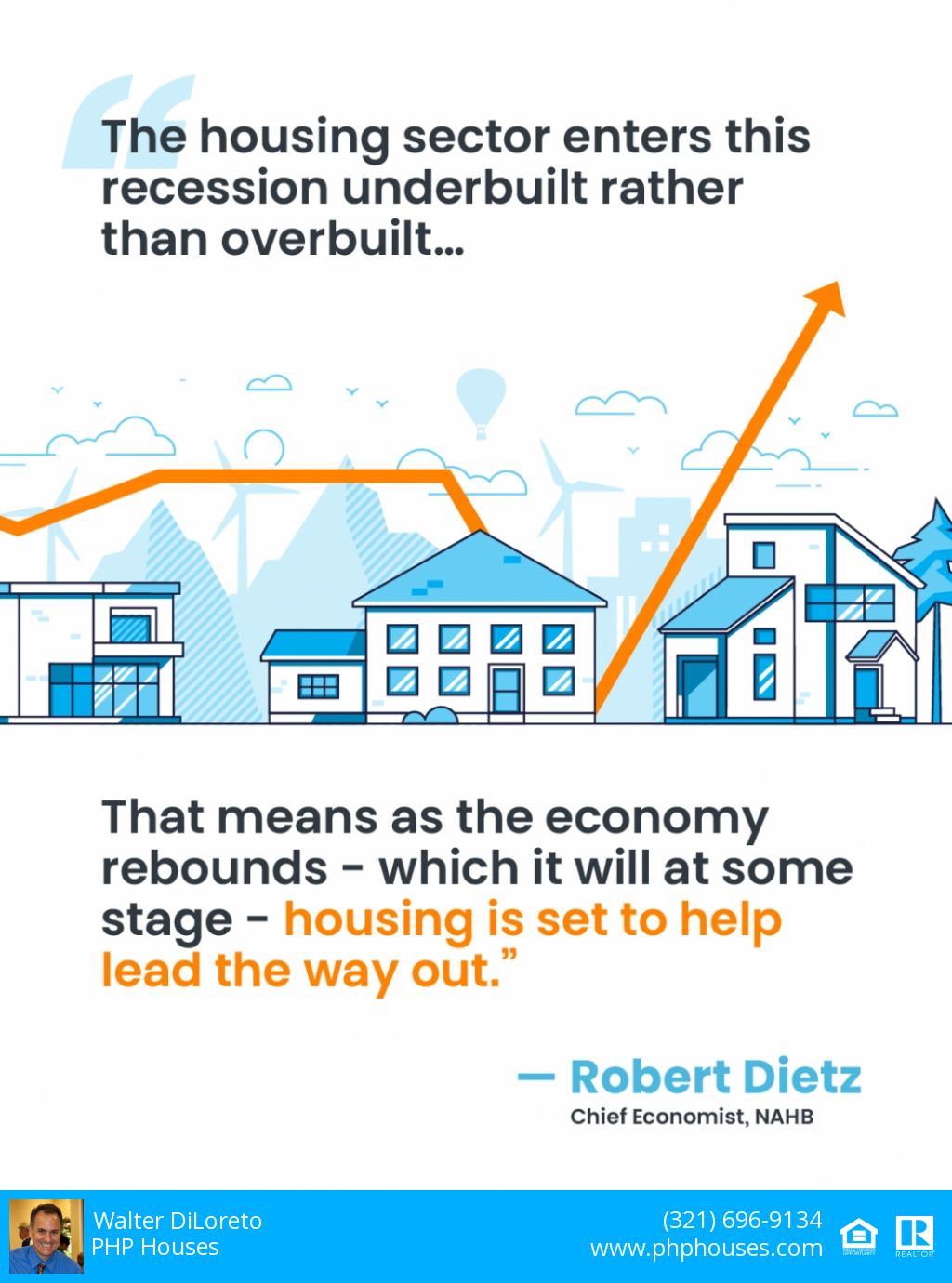
  • Expert insights are painting a bright future for housing when the economy bounces back – and it will.
  • We may be facing challenging economic times today, but the housing market is poised to help the economy recover, not drag it down.
  • Let’s connect to make sure you’re informed and ready when it’s time to make your move.

Contact us:
PHP Houses
142 W Lakeview Ave
Unit 1030
Lake Mary, FL 32746
Ph: (407) 519-0719
Fax: (407) 205-1951
email: info@phphouses.com

Let’s Connect:
Facebook
Linkedin
Twitter
Instagram

THE INFORMATION PRESENTED IN THIS ARTICLE IS FOR EDUCATIONAL PURPOSES ONLY AND SHOULD NOT BE CONSIDERED LEGAL, FINANCIAL, OR AS ANY OTHER TYPE OF ADVICE.

Problems With Using Bankruptcy to Stop Foreclosure in Florida

April 2, 2020 • Walter

Many homeowners feel powerless when their bank sends them a Notice of Default and might consider filing bankruptcy to stop foreclosure on their house. Knowing that they’re behind on mortgage payments can force borrowers to seek help in unlikely places.

If government loan modifications and repayment plans are unavailable to help a homeowner stop foreclosure, they can feel like their options are limited while going through a foreclosure.

With the threat of losing their family home and the stress related to major financial hardship, many homeowners will jump at any chance to stop foreclosure, no matter at what cost. Some homeowners might feel like their best option is filing for bankruptcy, but there are a multitude of problems with using bankruptcy to stop foreclosure.

Bankruptcy Misconceptions

problems when using bankruptcy to stop foreclosure

One of the main reasons homeowners choose to file bankruptcy on the cusp of foreclosure is due to the misconceptions associated with bankruptcy. Through misinformation and word-of-mouth exposure, people make assumptions on the bankruptcy process that are simply not true. These common misunderstandings contribute to the problems with using bankruptcy to stop foreclosure.

A likely misconception is that bankruptcy can stop the foreclosure process completely.

This is simply untrue.

Although declaring bankruptcy will buy time during the foreclosure process, it isn’t a permanent solution.

If bankruptcy is filed before the Notice of Sale, homeowners will experience a foreclosure bankruptcy stay. This automatic stay bars lenders from pursuing collective activities on a homeowner’s assets to repay what they already owe and begins as soon as the borrower files.

However, mortgage companies have the right to file a relief from stay.

Their case is especially strong if the borrower has already stopped making mortgage payments.

If the bankruptcy grants the motion, lenders will be able to continue with the foreclosure process. Unless a borrower is able to continue to make mortgage payments, filing for bankruptcy isn’t a reliable method to stopping foreclosure. It temporarily halts the foreclosure process; it doesn’t stop it permanently.

You Still Have to Pay Back the Loan

getting a loan to avoid using bankruptcy to stop foreclosure

Another common misconception is that homeowners who file bankruptcy can keep their residential property without having to pay back their loan.

Most borrowers file for bankruptcy to obtain a discharge, or release, from personal liability for their home loan debt. However, the foreclosure bankruptcy discharge is not guaranteed and is, thus, one of the ample problems with using bankruptcy to stop foreclosure.

The foreclosure bankruptcy discharge differs between chapters. When filing for Chapter 7, for instance, lenders have the option to object during a four-month-long grace period. They can file a motion to dismiss the case for a number of reasons and force borrowers to pay missed mortgage payments while continuing the foreclosure process.

With a Chapter 13 bankruptcy, however, homeowners can see a discharge only after successfully completing a payment plan, which usually lasts between three to five years. Before completing it, homeowners are vulnerable to foreclosure.

Amy Loftsgordon, contributor to a site all about national laws, wants homeowners to remember “that even though the borrower is no longer personally liable for the mortgage debt [with a successful bankruptcy discharge], the lender still has the right to foreclose if the borrower isn’t making mortgage payments.” Don’t count on a foreclosure bankruptcy discharge to save your home.

Foreclosure Bankruptcy Laws

signing paperwork to us bankruptcy to stop foreclosure

Before filing for bankruptcy, knowing your state’s foreclosure bankruptcy laws is necessary. Although there are a few slight variations to the laws throughout the country, the basic regulations apply to most homeowners seeking bankruptcy to disrupt foreclosure proceedings.

The changing bankruptcy laws can be a hassle when deciding to file. Approximately a decade ago, Congress overhauled the national bankruptcy laws, effectively making it harder for many people to file.

They reconfigured Chapters 7 and 13 bankruptcy specifically. Homeowners must pass a stricter means test to qualify for chapter 7 or risk paying back some of their debt in a separate Chapter 13 filing. In addition, the new bankruptcy laws require homeowners to get credit counseling prior to filing a bankruptcy case. These new additions are costly to homeowners in need of a speedy solution to foreclosure.

Before the change in policy, most homeowners were allowed to choose the type of bankruptcy ideally suited for their specific situation. Most decided to file for Chapter 7’s liquidation method over Chapter 13’s repayment plan.

The bankruptcy law initiated in 2005 now prohibits some homeowners with reported higher incomes from utilizing Chapter 7 bankruptcy. If a filer’s current monthly income is greater than the median for a household of equal size in their state, they must pass an additional means test before filing for Chapter 7. This bankruptcy law forces many homeowners to jump through time-consuming hoops before halting their foreclosure. If dealing with a foreclosure deadline, this added step can be costly.

the problem with bankruptcy to stop foreclosure

The foreclosing bankruptcy laws requiring additional credit counseling also contributes to the problems with using bankruptcy to stop foreclosure. Before filing for either Chapter under the new law, homeowners must complete mandated counseling with an agency provided by the United States Trustee’s office.

Although their purpose is to help struggling homeowners, these counseling sessions can hinder certain cases for bankruptcy. If the appointed counselors believe a borrower can meet monthly payments, they’re required to submit their findings to the court. These preliminary findings can be devastating to borrowers that need to stop foreclosure immediately or face eviction.

Before receiving an automatic stay from bankruptcy, filers must trek through many hurdles. These hurdles often impede a homeowner’s desire to keep their home. Although they may seem straightforward and simple, the ever-changing foreclosure bankruptcy laws and increased cost to qualify are some of the main problems with using bankruptcy to stop foreclosure.

Foreclosure Bankruptcy Taxes

doing research on your options when considering filing bankruptcy to stop foreclosure

Another one of the major problems with using bankruptcy to stop foreclosure is the current taxes aligned with selling. Homeowners must be wary of the additional costs to filing bankruptcy, especially if their goal is to ultimately save their home.

A common tax law requires bankruptcy filers to pay tax liability after receiving debt forgiveness. The principal treats any kind of financial forgiveness as a financial benefit, even if it means losing a home through foreclosure.

Homeowners are required to pay additional foreclosure bankruptcy taxes due to the federal government’s regulations, the Cancellation of Debt Income, or as a capital gain from foreclosure. If homeowners are currently struggling to pay their monthly mortgage payments, they’ll likely be unable to pay Uncle Sam, resulting in yet another incurred debt.

If a homeowner’s main focus is keeping their home despite their mortgage lender initiating foreclosure, filing for bankruptcy shouldn’t be a consideration. Filing for bankruptcy is time-consuming, the laws are constantly changing, and foreclosure bankruptcy taxes can be brutal on a homeowner’s wallet. Instead of experiencing the many problems with using bankruptcy to stop foreclosure, homeowners are advised to avoid the bankruptcy misconceptions and explore alternatives when facing foreclosure.

Are You Considering Using Bankruptcy to Stop Foreclosure

If foreclosure is looming for you, you should consider getting a cash offer from a cash home buyer. PHP Houses, Llc has helped dozens of sellers in Orange Seminole Volusia Lake Osceola Counties sell their house before foreclosure. This has allowed them to keep the foreclosure off their credit and receive some of the equity they had in the home instead of losing it all.

If you’d like to find out how much we can offer if you decide to sell your Central Florida house fast, give us a call at (407) 519-0719. We look forward to talking with you about how the process works and what we can do for you.

Contact us:
PHP Houses
142 W Lakeview Ave
Unit 1030
Lake Mary, FL 32746
Ph: (407) 519-0719
Fax: (407) 205-1951
email: info@phphouses.com

Let’s Connect:
Facebook
Linkedin
Twitter
Instagram

The information presented in this article is for educational purposes only and should not be considered legal, financial, or as any other type of advice.

Looking to the Future: What the Experts Are Saying

April 2, 2020 • Walter

Looking to the Future: What the Experts Are Saying

As our lives, our businesses, and the world we live in change day by day, we’re all left wondering how long this will last. How long will we feel the effects of the coronavirus? How deep will the impact go? The human toll may forever change families, but the economic impact will rebound with a cycle of downturn followed by economic expansion like we’ve seen play out in the U.S. economy many times over.

Here’s a look at what leading experts and current research indicate about the economic impact we’ll likely see as a result of the coronavirus. It starts with a forecast of U.S. Gross Domestic Product (GDP).

According to Investopedia:

“Gross Domestic Product (GDP) is the total monetary or market value of all the finished goods and services produced within a country’s borders in a specific time period. As a broad measure of overall domestic production, it functions as a comprehensive scorecard of the country’s economic health.”

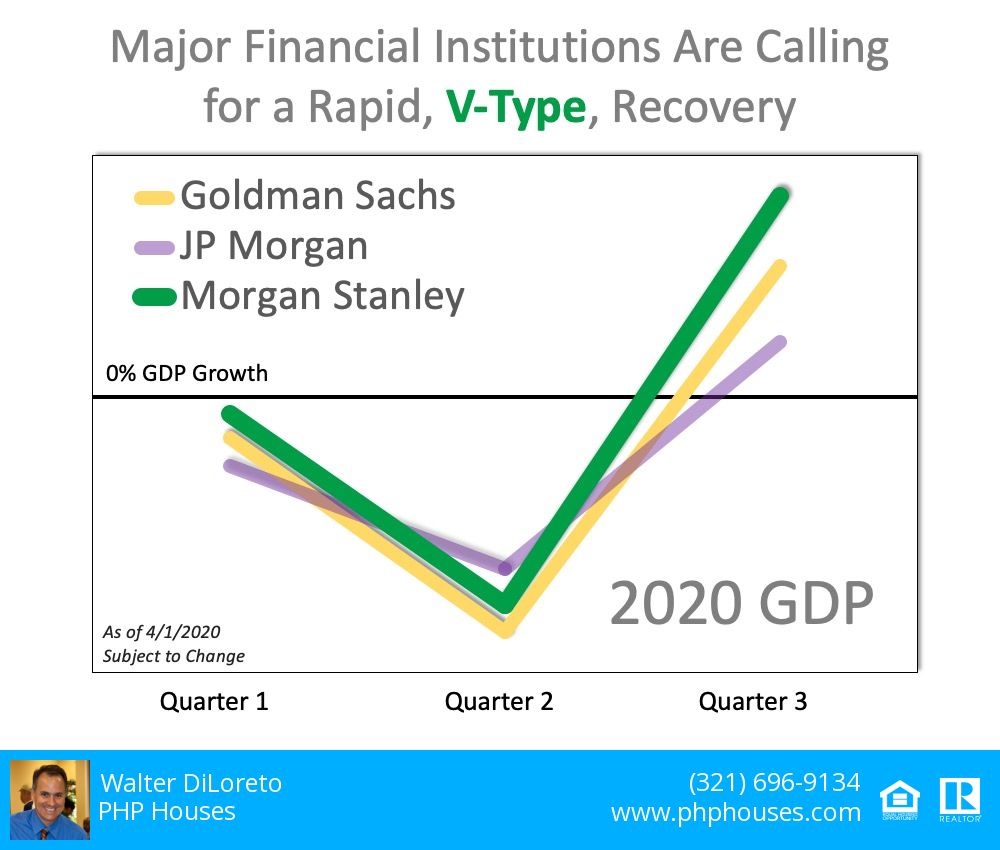
When looking at GDP (the measure of our country’s economic health), a survey of three leading financial institutions shows a projected sharp decline followed by a steep rebound in the second half of this year:

Major FInancial Institutions Are Calculating for a Rapid V-Type Recovery

A recent study from John Burns Consulting also notes that past pandemics have also created V-Shaped Economic Recoveries like the ones noted above, and they had minimal impact on housing prices. This certainly gives hope and optimism for what is to come as the crisis passes.

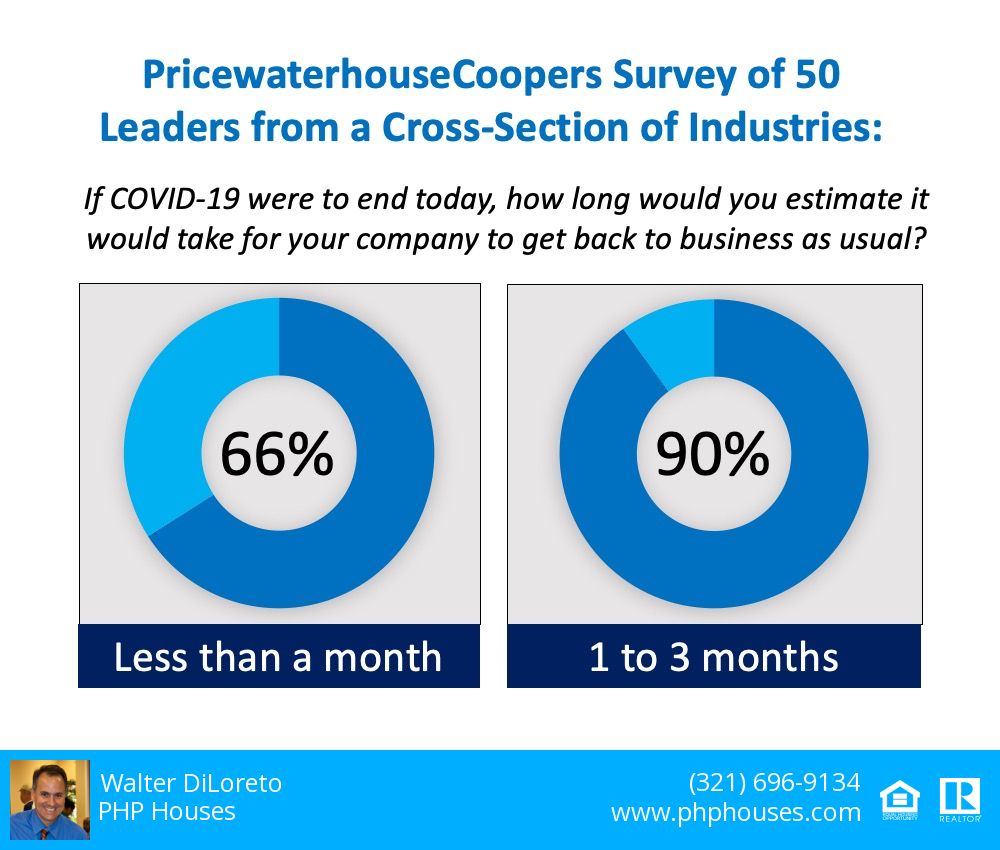
With this historical analysis in mind, many business owners are also optimistic for a bright economic return. A recent PricewaterhouseCoopers survey shows this confidence, noting 66% of surveyed business owners feel their companies will return to normal business rhythms within a month of the pandemic passing, and 90% feel they should be back to normal operation 1 to 3 months after:

Survey of 50 Leaders from a Cross-Section of Industries

From expert financial institutions to business leaders across the country, we can clearly see that the anticipation of a quick return to normal once the current crisis subsides is not too far away. In essence, this won’t last forever, and we will get back to growth-mode. We’ve got this.

Bottom Line

Lives and businesses are being impacted by the coronavirus, but experts do see a light at the end of the tunnel. As the economy slows down due to the health crisis, we can take guidance and advice from experts that this too will pass.

Contact us:
PHP Houses
142 W Lakeview Ave
Unit 1030
Lake Mary, FL 32746
Ph: (407) 519-0719
Fax: (407) 205-1951
email: info@phphouses.com

Let’s Connect:
Facebook
Linkedin
Twitter
Instagram

THE INFORMATION PRESENTED IN THIS ARTICLE IS FOR EDUCATIONAL PURPOSES ONLY AND SHOULD NOT BE CONSIDERED LEGAL, FINANCIAL, OR AS ANY OTHER TYPE OF ADVICE.

The #1 Thing You Can Do Now to Position Yourself to Buy a Home This Year

April 1, 2020 • Walter

The #1 Thing You Can Do Now to Position Yourself to Buy a Home This Year

The last few weeks and months have caused a major health crisis throughout the world, leading to a pause in the U.S. economy as businesses and consumers work to slow the spread of the coronavirus. The rapid spread of the virus has been compared to prior pandemics and outbreaks not seen in many years. It also has consumers remembering the economic slowdown of 2008 that was caused by a housing crash. This economic slowdown, however, is very different from 2008. In the next paragraphs we’ll show you the #1 Thing You Can Do Now to Position Yourself to Buy a Home This Year.

One thing the experts are saying is that while we’ll see a swift decline in economic activity in the second quarter, we’ll begin a sharp rebound in the second half of this year. According to John Burns Consulting:

“Historical analysis showed us that pandemics are usually V-shaped (sharp recessions that recover quickly enough to provide little damage to home prices), and some very cutting-edge search engine analysis by our Information Management team showed the current slowdown is playing out similarly thus far.” 

Given this situation, if you’re thinking about buying a home this year, the best thing you can do right now is use this time to get pre-approved for a mortgage, which you can do from the comfort of your home. Pre-approval will help you better understand how much you can afford so that you can confidently do the following two things when you’re ready to buy:

1. Gain a Competitive Advantage

Today’s low inventory, like we’ve seen recently and will continue to see, means homebuyers need every advantage they can get to make a strong offer and close the deal. Being pre-approved shows the sellers you’re serious about buying a home, which is always a plus in your corner.

2. Accelerate the Homebuying Process

Pre-approval can also speed-up the homebuying process so you can move faster when you’re ready to make an offer. Being ready to put your best foot forward when the time comes may be the leg-up you need to cross the finish line first and land the home of your dreams.

Bottom Line

Pre-approval is the best thing you can do right now to be in a stronger position to buy a home when you’re ready. Let’s connect today to get the process started.

Contact us:
PHP Houses
142 W Lakeview Ave
Unit 1030
Lake Mary, FL 32746
Ph: (407) 519-0719
Fax: (407) 205-1951
email: info@phphouses.com

Let’s Connect:
Facebook
Linkedin
Twitter
Instagram

THE INFORMATION PRESENTED IN THIS ARTICLE IS FOR EDUCATIONAL PURPOSES ONLY AND SHOULD NOT BE CONSIDERED LEGAL, FINANCIAL, OR AS ANY OTHER TYPE OF ADVICE.

The Economic Impact of Buying a Home

March 31, 2020 • Walter

The Economic Impact of Buying a Home

We’re in a changing real estate market, and life, in general, is changing too – from how we grocery shop and meal prep to the ways we can interact with our friends and neighbors. Even practices for engaging with agents, lenders, and all of the players involved in a real estate transaction are changing to a virtual format. What isn’t changing, however, is one key thing that can drive the local economy: buying a home.

We’re all being impacted in different ways by the effects of the coronavirus. If you’re in a position to buy a home today, know that you’re a major economic force in your neighborhood. And while we all wait patiently for the current pandemic to pass, there are a lot of things you can do in the meantime to keep your home search on track.

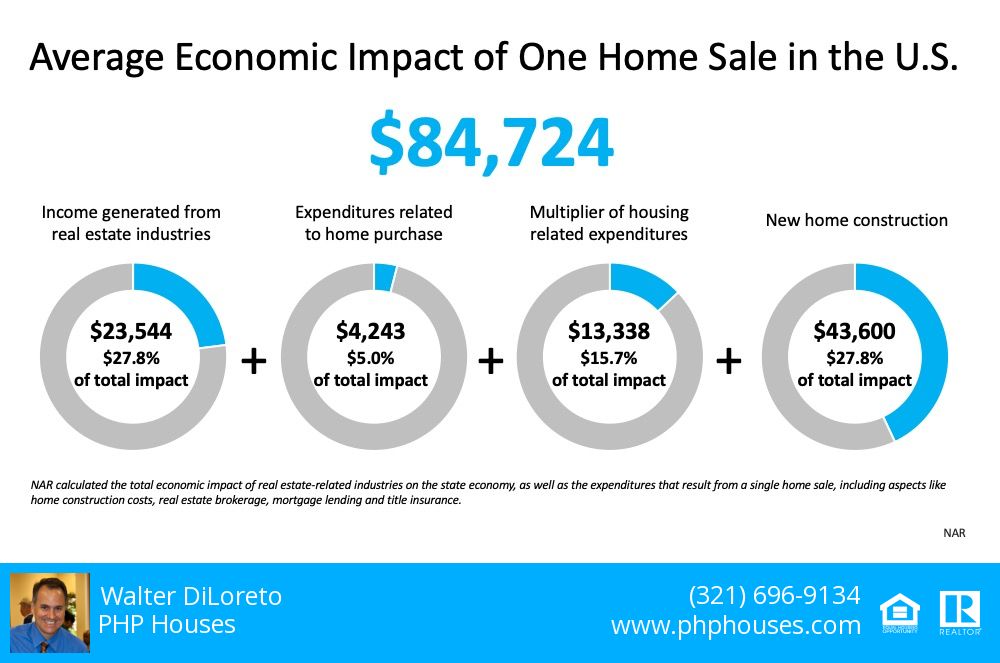
Every year the National Association of Realtors (NAR) shares a report that notes the full economic impact of home sales. This report summarizes:

“The total economic impact of real estate related industries on the state economy, as well as the expenditures that result from a single home sale, including aspects like home construction costs, real estate brokerage, mortgage lending and title insurance.”

Here’s the breakdown of how the average home sale boosts the economy:

Average Economic Impact of One Home Sale in the U.S.

When you buy a home, you’re making an impact. You’re fulfilling your need for shelter and a place to live, and you’re also generating jobs and income for the appraiser, the loan officer, the title company, the real estate agent, and many more contributors to the process. For every person or business that you work with throughout the transaction, there’s also likely a team behind the scenes making it all happen, so the effort multiplies substantially. As noted above in the circle on the right, the impact is almost double when you purchase new construction, given the extra labor it requires to build the home.

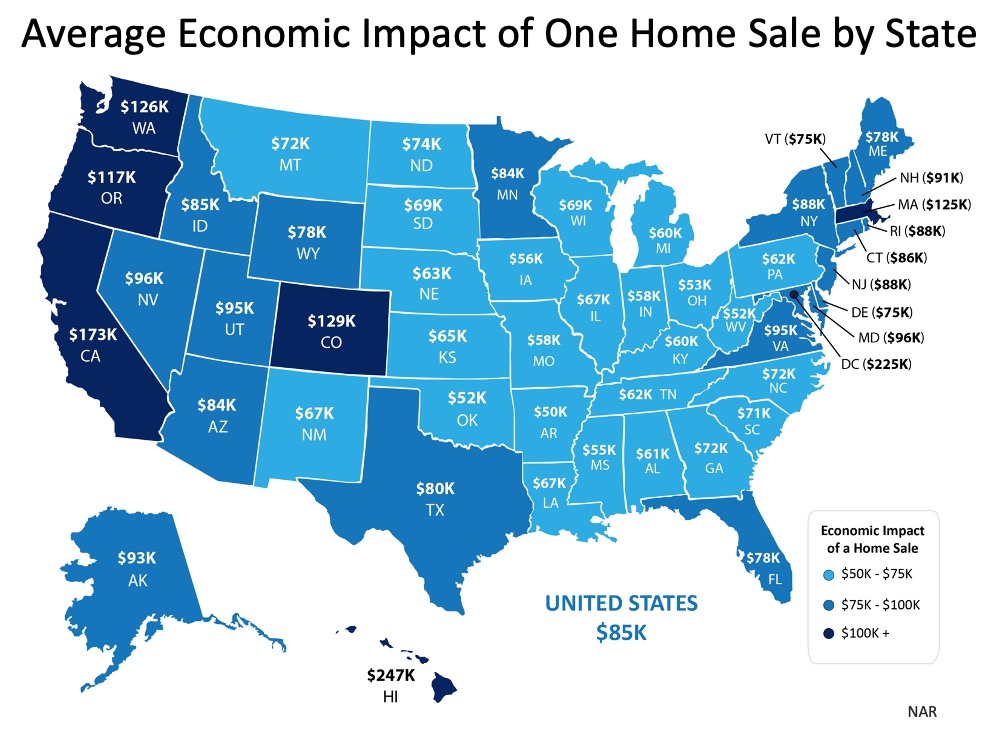
The report also breaks down the average economic impact by state:

Average Economic Impact of One House by State

As a buyer, you have an essential need for a home – and you can make an essential impact with homeownership, too. That need for shelter, comfort, and a safe place to live will always be alive and well. And whenever you’re able to act on that need, whether now or later, you’ll truly be creating gains for you, your family, local business professionals, and the overall economy.

Bottom Line

Whenever you purchase a home, you’re an economic driver. Even if you’re not ready or able to make a move now, there are things you can do to keep your own process moving forward so you’re set when the time is right for you. Let’s connect to keep your home search – and your local contributions – on track.

Contact us:
PHP Houses
142 W Lakeview Ave
Unit 1030
Lake Mary, FL 32746
Ph: (407) 519-0719
Fax: (407) 205-1951
email: info@phphouses.com

Let’s Connect:
Facebook
Linkedin
Twitter
Instagram

THE INFORMATION PRESENTED IN THIS ARTICLE IS FOR EDUCATIONAL PURPOSES ONLY AND SHOULD NOT BE CONSIDERED LEGAL, FINANCIAL, OR AS ANY OTHER TYPE OF ADVICE.

The Best Advice Does Not Mean Perfect Advice

March 30, 2020 • Walter

The Best Advice Does Not Mean Perfect Advice

The angst caused by the coronavirus has most people on edge regarding both their health and financial situations. It’s at times like these when we want exact information about anything we’re doing – even the correct protocol for grocery shopping. That information brings knowledge, and this gives us a sense of relief and comfort.

If you’re thinking about buying or selling a home today, the same need for information is very real. But, because it’s such a big step in our lives, that desire for clear information is even greater in the homebuying or selling process. Given the current level of overall anxiety, we want that advice to be truly perfect. The challenge is, no one can give you “perfect” advice. Experts can, however, give you the best advice possible.

Let’s say you need an attorney, so you seek out an expert in the type of law required for your case. When you go to her office, she won’t immediately tell you how the case is going to end or how the judge or jury will rule. If she could, that would be perfect advice. What a good attorney can do, however, is discuss with you the most effective strategies you can take. She may recommend one or two approaches she believes will be best for your case.

She’ll then leave you to make the decision on which option you want to pursue. Once you decide, she can help you put a plan together based on the facts at hand. She’ll help you achieve the best possible resolution and make whatever modifications in the strategy are necessary to guarantee that outcome. That’s an example of the best advice possible.

The role of a real estate professional is just like the role of the lawyer. An agent can’t give you perfect advice because it’s impossible to know exactly what’s going to happen throughout the transaction – especially in this market.

An agent can, however, give you the best advice possible based on the information and situation at hand, guiding you through the process to help you make the necessary adjustments and best decisions along the way. An agent will get you the best offer available. That’s exactly what you want and deserve.

Bottom Line

If you’re thinking of buying or selling, contact a local real estate professional to make sure you get the best advice possible.

Contact us:
PHP Houses
142 W Lakeview Ave
Unit 1030
Lake Mary, FL 32746
Ph: (407) 519-0719
Fax: (407) 205-1951
email: info@phphouses.com

Let’s Connect:
Facebook
Linkedin
Twitter
Instagram

THE INFORMATION PRESENTED IN THIS ARTICLE IS FOR EDUCATIONAL PURPOSES ONLY AND SHOULD NOT BE CONSIDERED LEGAL, FINANCIAL, OR AS ANY OTHER TYPE OF ADVICE.

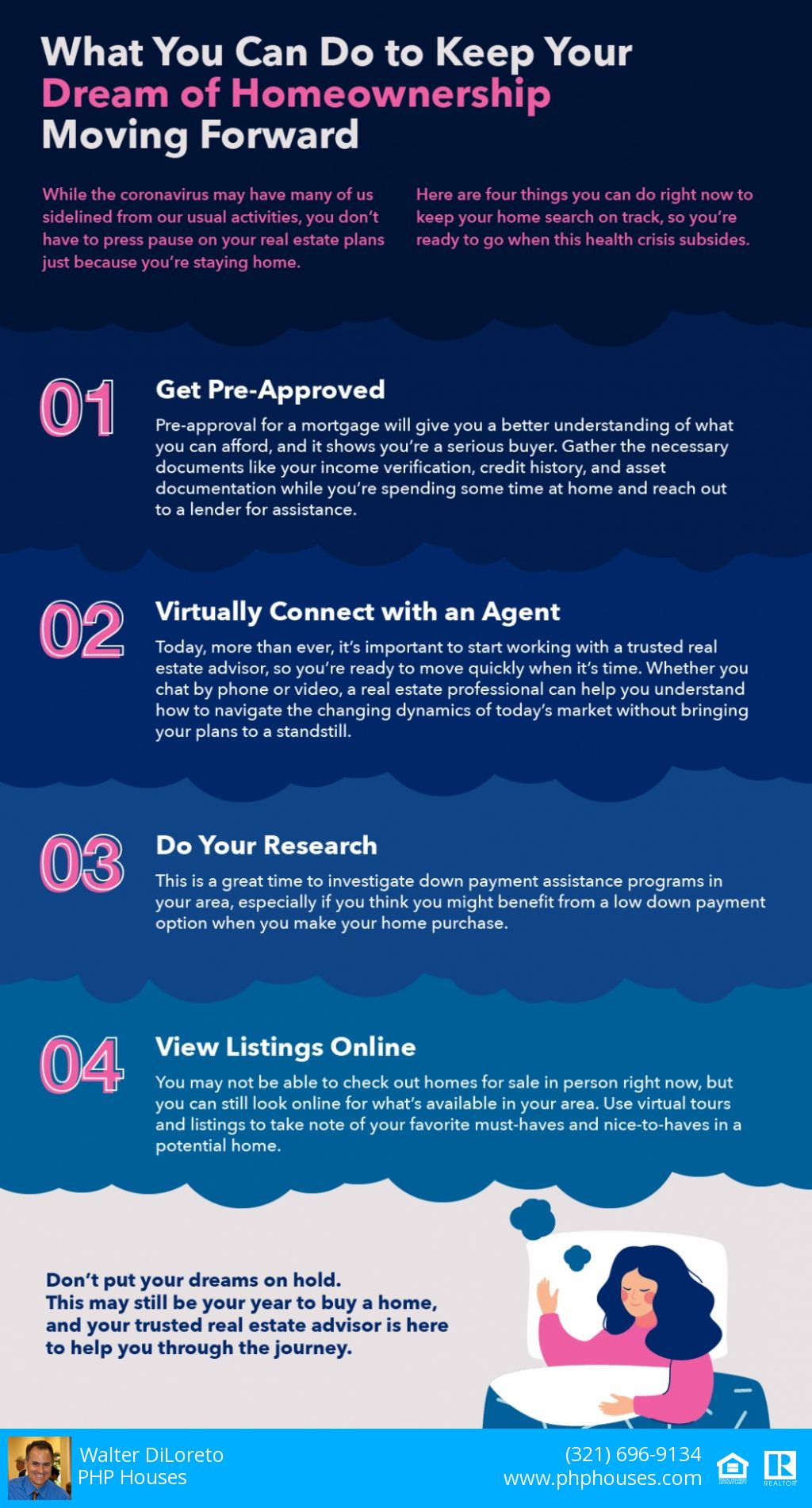
What You Can Do to Keep Your Dream of Homeownership Moving Forward

March 27, 2020 • Walter

What You Can Do to Keep Your Dream of Homeownership Moving Forward

Some Highlights:

  • Don’t put your homeownership plans on hold just because you’re stuck inside.
  • There are several things you can do right now to keep your home search moving forward.
  • Connect with an agent, learn about resource programs for things like down payments, and get pre-approved today.

Contact us:
PHP Houses
142 W Lakeview Ave
Unit 1030
Lake Mary, FL 32746
Ph: (407) 519-0719
Fax: (407) 205-1951
email: info@phphouses.com

Let’s Connect:
Facebook
Linkedin
Twitter
Instagram

THE INFORMATION PRESENTED IN THIS ARTICLE IS FOR EDUCATIONAL PURPOSES ONLY AND SHOULD NOT BE CONSIDERED LEGAL, FINANCIAL, OR AS ANY OTHER TYPE OF ADVICE.

I’m Facing Foreclosure What Are My Options?

March 26, 2020 • Walter

Homeowners Have Several Options When Facing Foreclosure.

facing foreclosure options

Loan modifications, secondary loans, borrowing from acquaintances, filing for bankruptcy, and selling are all possibilities with varying success rates.

But all foreclosure options aren’t equal. Some common methods used to avoid facing foreclosure can leave the homeowner incurring a larger debt. Other recommended strategies used to stop foreclosure require third-parties to be sympathetic to the foreclosure plight.

If halting foreclosure is a homeowner’s goal, the best foreclosure option might be the least likely.

Modifying Your Loan When Facing Foreclosure

facing foreclosure loan

One of the most common foreclosure options homeowners consider when facing foreclosure is modifying their pre-existing mortgage. This method consists of contacting your mortgage company and requesting one of the many loan modification programs currently out there. While this method is attractive due to its lack of major lifestyle intervention and the ability to keep your home, many homeowners can’t meet the strict modification regulations to keep the foreclosure process at bay.

Typically, loan modifications change the terms initially instituted by a loan agreement between a borrower and a lender.

The lender can change the mortgage payment multiple ways: by lowering the interest rate or late fees, extending the loan term, or reducing the original amount of the agreement. The goal is the same though. Loan modifications are used strategically to lower the monthly payment plan so the homeowner can keep making payments.

It’s an effective solution as long as a borrower is willing and able to continue payments.

There are several loan modification programs to assist homeowners in making those monthly payments. One of the most popular is the new Home Affordable Modification Program, enacted by President Obama. Also known as the Homeowner Affordability and Stability Plan (HASP), it allows homeowners to refinance to reduce monthly payments. This program implements a special Making Home Affordable loan modification that can be applied by lenders for homeowners at risk of facing foreclosure.

HASP, as well as most other loan modification programs, comes with mountains of paperwork and a hefty application process. To begin, a lender will ask the homeowner for a set of documents which will be assessed for general qualification. This will include a hardship affidavit in which the borrower explains the set of circumstances that led them to the inability to pay the current mortgage amount.

It also must include the reasons way the borrower will be able to pay the proposed modified mortgage. These hardship letters can be tricky and time-consuming to write and are not often accepted when considering a home loan modification.

Borrowing Money

money back when facing foreclosure

Other common foreclosure options include borrowing money. Homeowners threatened with facing foreclosure need money fast to keep the creditors satiated. Even with a successful loan modification, borrowers need to pay their monthly payments. Often times, cash-strapped homeowners will seek help from friends and family.

Borrowing a large amount of money from friends and family is a bad idea though, especially when your home can be seized by the bank at any time. Money Crasher’s Casey Slide compiled a list of reasons why a person shouldn’t lend money to family and friends.

However, this list can be used to argue why homeowners should avoid borrowing from their loved ones too. Some of Slide’s complaints included people’s ability to be unreliable, borrowers feeling like a servant to the lender, and ending an important relationship due to a loan agreement gone wrong. At best, receiving a loan from a friend or family member will leave a homeowner indebted; at worst, it can leave them with an eviction notice and a failed relationship. Before borrowing money from loved ones, consider other foreclosure options.

Homeowners also choose to borrow money from other loan-offering entities to offset any arrears accrued by their missed mortgage payments. Attempting to pay off a loan with another loan can be dangerous for a homeowner’s credit and lead to a larger debt. It’s an ill-advised method to avoid facing foreclosure.

Facing Foreclosure & Filing Bankruptcy

facing foreclosure options bankruptcy

Many homeowners in financial distress believe the best foreclosure option is filing for bankruptcy to stop foreclosure.

This is due to the numerous misconceptions associated with bankruptcy relief. These misconceptions allow homeowners to believe several fallacies, including bankruptcy will stop you from facing foreclosure, it’s a simple process to file, and that filers will be able to keep their home without paying what they owe on their mortgage. Unfortunately for homeowners, these blanket statements are simply untrue.

Although declaring bankruptcy will buy time during the foreclosure process, it won’t stop the process completely.

If a homeowner files for bankruptcy during the foreclosure process but before the bank sets an auction date, homeowners will be granted an automatic stay. This motion stops lenders from collecting a homeowner’s assets to repay what they owe on the mortgage.

Although an automatic stay is initiated as soon as the borrower files for foreclosure, lenders have rights to appeal this motion. Mortgage companies may file a relief from stay, especially if the borrower has already stopped making monthly mortgage payments. If the bankruptcy grants the lender’s motion, the mortgage company will be able to continue with the foreclosure process and limit the homeowner’s foreclosure options.

A major hassle when filing for bankruptcy are the laws and restrictions associated with the process. Even though all homeowners are allowed to seek the bankruptcy option, many are unable to file due to recent laws that were passed by Congress.

The new bankruptcy laws require homeowners to receive credit counseling from creditors approved by the United States Trustee’s office before filing a bankruptcy case. If the counselors believe a borrower can meet monthly payments due to any number of factors, they’re required to submit their findings to the bankruptcy court. These preliminary findings can devastate a borrower’s bankruptcy case while forcing homeowners to continually pay for a mortgage they can’t afford.

In addition to mandatory credit counseling, homeowners must pass a stricter means test to qualify for bankruptcy. The newest bankruptcy laws restrict some homeowners with higher incomes from filing for Chapter 7 bankruptcy. Whereas outdated bankruptcy laws allowed homeowners to file for either Chapter 7 or Chapter 13 without restraint, the new regulations require homeowners to pass a means test if a filer’s current monthly income is greater than the median for a household of equal size in their state. This addendum to the already tedious bankruptcy laws are costly to homeowners in need of speedier foreclosure options.

Whether it’s a Chapter 7 liquidation of all debts or a Chapter 13 repayment plan, filing for bankruptcy is not a permanent solution to avoid facing foreclosure. Homeowners are not guaranteed to keep their home while risking seven years of poor credit. For borrowers that need to stop foreclosure immediately, this is not the best foreclosure option.

Selling Your Home Fast

house for sale when facing foreclosure

One of the best options a homeowner has when facing foreclosure is selling their home before an auction. This allows the homeowner to pay off their mortgage and other secondary loans associated with the house, while pocketing any extra profit made from the sale. If the threat of foreclosure is imminent, selling your home as quickly as possible is the best way to avoid facing foreclosure. When a homeowner sells their property, they avoid the credit-destroying experience of foreclosure while able to pay off any lingering debts that caused their initial financial hardship. Consider a cash home buyer to sell immediately, if you’ve already received your Notice of Default. Selling before the lender regains ownership saves the homeowner time and money.

Foreclosure help comes in various shapes and sizes. While asking for help from your mortgage lender or family can be successful, homeowners are often put in precarious financial situations worsening their debt. Filing for foreclosure may also help some borrowers in need, but the heavy restrictions and general misconceptions make it an unreliable option. One of the best options when facing foreclosure is selling your home before auction and paying off your mortgage. Selling a foreclosed home can be simple and lucrative if sold to the right buyer. Weigh your options before attempting to stop foreclosure.

Get a Cash Offer if You’re Facing Foreclosure

We buy houses in Florida and can close very fast. This gives you an option if you are facing foreclosure. We are able to buy the house completely as-is so that you don’t have to make repairs or wait for them to be made.

You won’t have to wait for a qualified buyer to come along because we are the buyer!

We make cash offers within 24 hours and there is no-obligation or fee for us to do so. If you like the offer, we move forward. If you don’t, we won’t. Simple as that.

Give us a call at 407-519-0719 to see what can pay for your house today.

Contact us:
PHP Houses
142 W Lakeview Ave
Unit 1030
Lake Mary, FL 32746
Ph: (407) 519-0719
Fax: (407) 205-1951
email: info@phphouses.com

Let’s Connect:
Facebook
Linkedin
Twitter
Instagram

The information presented in this article is for educational purposes only and should not be considered legal, financial, or as any other type of advice.

Don’t Let Frightening Headlines Scare You

March 26, 2020 • Walter

Don’t Let Frightening Headlines Scare You

There’s a lot of anxiety right now regarding the coronavirus pandemic. The health situation must be addressed quickly, and many are concerned about the impact on the economy as well.

Amidst all this anxiety, anyone with a megaphone – from the mainstream media to a lone blogger – has realized that bad news sells. Unfortunately, we will continue to see a rash of horrifying headlines over the next few months. Let’s make sure we aren’t paralyzed by a headline before we get the full story.

When it comes to the health issue, you should look to the Centers for Disease Control and Prevention (CDC) or the World Health Organization (WHO) for the most reliable information.

Finding reliable resources with information on the economic impact of the virus is more difficult. For this reason, it’s important to shed some light on the situation. There are already alarmist headlines starting to appear. Here are two such examples surfacing this week.

1. Goldman Sachs Forecasts the Largest Drop in GDP in Almost 100 Years

It sounds like Armageddon. Though the headline is true, it doesn’t reflect the full essence of the Goldman Sachs forecast. The projection is actually that we’ll have a tough first half of the year, but the economy will bounce back nicely in the second half; GDP will be up 12% in the third quarter and up another 10% in the fourth.

This aligns with research from John Burns Consulting involving pandemics, the economy, and home values. They concluded:

“Historical analysis showed us that pandemics are usually V-shaped (sharp recessions that recover quickly enough to provide little damage to home prices), and some very cutting-edge search engine analysis by our Information Management team showed the current slowdown is playing out similarly thus far.”

The economy will suffer for the next few months, but then it will recover. That’s certainly not Armageddon.

2. Fed President Predicts 30% Unemployment!

That statement was made by James Bullard, President of the Federal Reserve Bank of St. Louis. What Bullard actually said was it “could” reach 30%. But let’s look at what else he said in the same Bloomberg News interview:

“This is a planned, organized partial shutdown of the U.S. economy in the second quarter,” Bullard said. “The overall goal is to keep everyone, households and businesses, whole” with government support.

According to Bloomberg, he also went on to say:

“I would see the third quarter as a transitional quarter” with the fourth quarter and first quarter next year as “quite robust” as Americans make up for lost spending. “Those quarters might be boom quarters,” he said.

Again, Bullard agrees we will have a tough first half and rebound quickly.

Bottom Line

There’s a lot of misinformation out there. If you want the best advice on what’s happening in the current housing market, let’s talk today.

Contact us:
PHP Houses
142 W Lakeview Ave
Unit 1030
Lake Mary, FL 32746
Ph: (407) 519-0719
Fax: (407) 205-1951
email: info@phphouses.com

Let’s Connect:
Facebook
Linkedin
Twitter
Instagram

THE INFORMATION PRESENTED IN THIS ARTICLE IS FOR EDUCATIONAL PURPOSES ONLY AND SHOULD NOT BE CONSIDERED LEGAL, FINANCIAL, OR AS ANY OTHER TYPE OF ADVICE.

Is Now a Good Time to Refinance My Home?

March 25, 2020 • Walter

Money and home,loan,mortgage. Change home into cash concept. US Dollar in sack bag, Wooden house model put on scales on wood table with green tree bokeh as background. Balance home and debt.

With interest rates hitting all-time lows over the past few weeks, many homeowners are opting to refinance. To decide if refinancing your home is the best option for you and your family, start by asking yourself these questions:

Why do you want to refinance?

There are many reasons to refinance, but here are three of the most common ones:

1. Lower Your Interest Rate and Payment: This is the most popular reason. Is your current interest rate higher than what’s available today? If so, it might be worth seeing if you can take advantage of the current lower rates.

2. Shorten the Term of Your Loan: If you have a 30-year loan, it may be advantageous to change it to a 15 or 20-year loan to pay off your mortgage sooner rather than later.

3. Cash-Out Refinance: You might have enough equity to cash out and invest in something else, like your children’s education, a business venture, an investment property, or simply to increase your cash reserve.

Once you know why you might want to refinance, ask yourself the next question:

How much is it going to cost?

There are fees and closing costs involved in refinancing, and The Lenders Network explains:

As an example, let’s say your mortgage has a balance of $200,000. If you were to refinance that loan into a new loan, total closing costs would run between 2%-4% of the loan amount. You can expect to pay between $4,000 to $8,000 to refinance this loan.”

They also explain that there are options for no-cost refinance loans, but be on the lookout:

“A no-cost refinance loan is when the lender pays the closing costs for the borrower. However, you should be aware that the lender makes up this money from other aspects of the mortgage. Usually charging a slightly higher interest rate so they can make the money back.”

Keep in mind that, given the current market conditions and how favorable they are for refinancing, it can take a little longer to execute the process today. This is because many other homeowners are going this route as well. As Todd Teta, Chief Officer at ATTOM Data Solutions notes about recent mortgage activity 

“Refinancing largely drove the trend, with more than twice as many homeowners trading in higher-interest mortgages for cheaper ones than in the same period of 2018.”

Clearly, refinancing has been on the rise lately. If you’re comfortable with the up-front cost and a potential waiting period due to the high volume of requests, then ask yourself one more question:

Is it worth it? 

To answer this one, do the math. Will it help you save money? How much longer do you need to own your home to break even? Will your current home meet your needs down the road? If you plan to stay for a few years, then maybe refinancing is your best move.

If, however, your current home doesn’t fulfill your needs for the next few years, you might want to consider using your equity for a down payment on a new home instead. You’ll still get a lower interest rate than the one you have on your current house, and with the equity you’ve already built, you can finally purchase the home you’ve been waiting for.

Bottom Line

Today, more than ever, it’s important to start working with a trusted real estate advisor. Whether you connect by phone or video chat, a real estate professional can help you understand how to safely navigate the housing market so that you can prioritize the health of your family without having to bring your plans to a standstill. Whether you’re looking to refinance, buy, or sell, a trusted advisor knows the best protocol as well as the optimal resources and lenders to help you through the process in this fast-paced world that’s changing every day.

Contact us:
PHP Houses
142 W Lakeview Ave
Unit 1030
Lake Mary, FL 32746
Ph: (407) 519-0719
Fax: (407) 205-1951
email: info@phphouses.com

Let’s Connect:
Facebook
Linkedin
Twitter
Instagram

THE INFORMATION PRESENTED IN THIS ARTICLE IS FOR EDUCATIONAL PURPOSES ONLY AND SHOULD NOT BE CONSIDERED LEGAL, FINANCIAL, OR AS ANY OTHER TYPE OF ADVICE.
Previous Posts Next Posts